 M&B Whisky
From barley to cask
Every cask of Scotch begins in a distillery. Understanding how the spirit is made, and where, is the best preparation for choosing a cask with confidence.
How Scotch whisky is made
Malt whisky needs only three ingredients: malted barley, water and yeast. What happens to them in each distillery, and in the cask afterwards, is what makes one whisky different from the next.
One
Malting
Barley is soaked, allowed to germinate and then dried in a kiln. Where the kiln is fired with peat, the smoke gives the malt, and later the whisky, its smoky character.
Two
Mashing
The malt is milled into grist and mixed with hot water in a mash tun, dissolving its sugars into a sweet liquid called wort.
Three
Fermentation
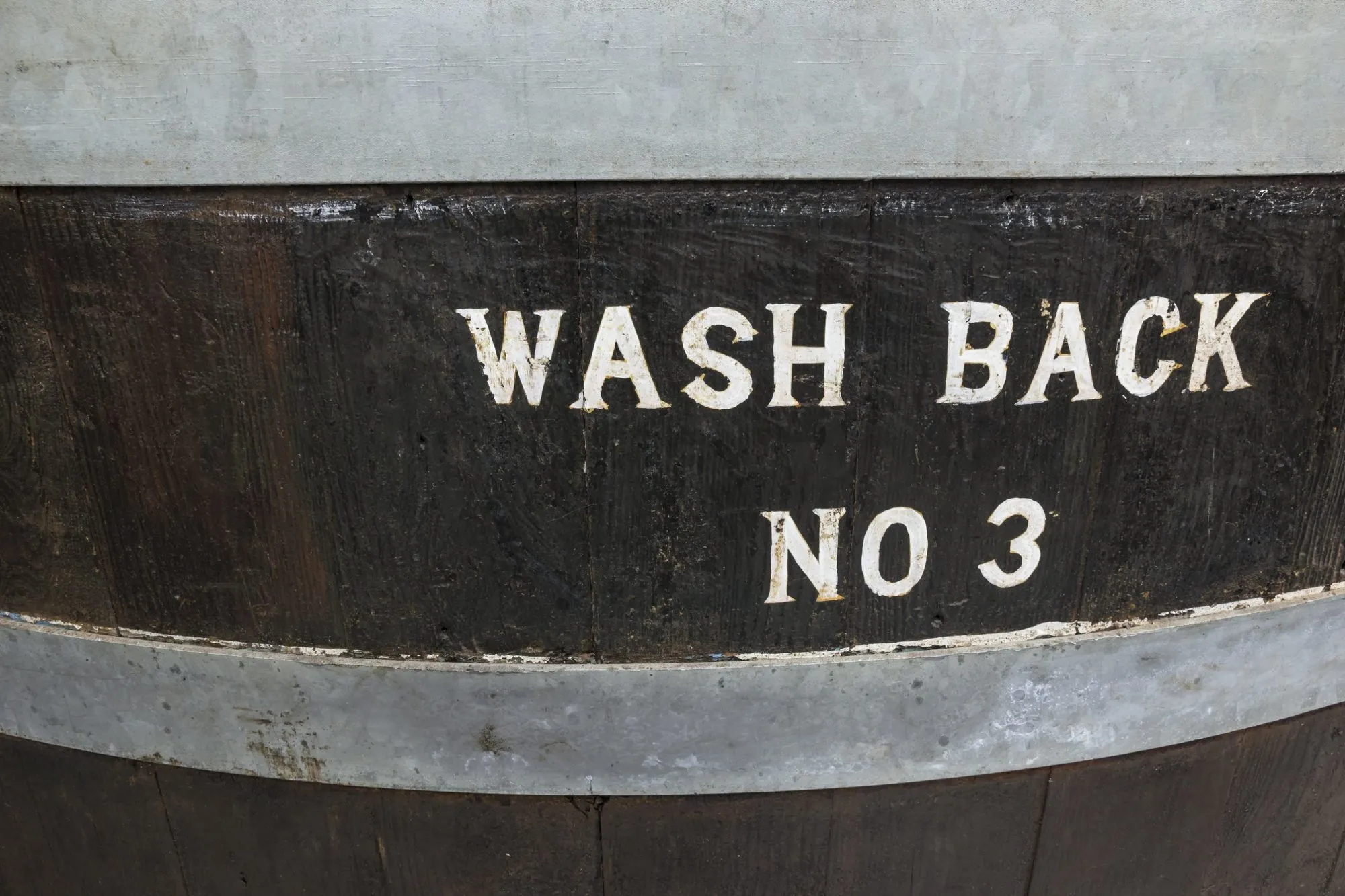
The wort is cooled and yeast is added in large vessels called washbacks. Fermentation usually takes two to four days and produces wash, a beer-like liquid of around 7 to 9% alcohol.
Four
Distillation
Malt whisky is distilled in copper pot stills, usually twice and occasionally three times. The shape of the stills and how they are run have a lasting influence on the spirit’s character.
Five
The cut
From the final distillation, the stillman keeps only the middle of the run, the heart, as new make spirit. The first and last parts, the foreshots and feints, are collected and distilled again with the next batch.
Six
Maturation
The new make is filled into oak casks and laid down in a bonded warehouse. Only after at least three years in Scotland may it be called Scotch whisky.
The five categories of Scotch
The Scotch Whisky Regulations 2009 define five categories. Grain whisky is usually made from wheat or maize with some malted barley, and is usually distilled in continuous column stills. Malt whisky must be distilled in pot stills.
Single malt
Made at a single distillery from malted barley only, distilled in pot stills.
Single grain
Made at a single distillery, from malted barley with or without other cereals.
Blended malt
A blend of single malts from more than one distillery.
Blended grain
A blend of single grain whiskies from more than one distillery.
Blended Scotch
A blend of one or more single malts with one or more single grains.
The regions
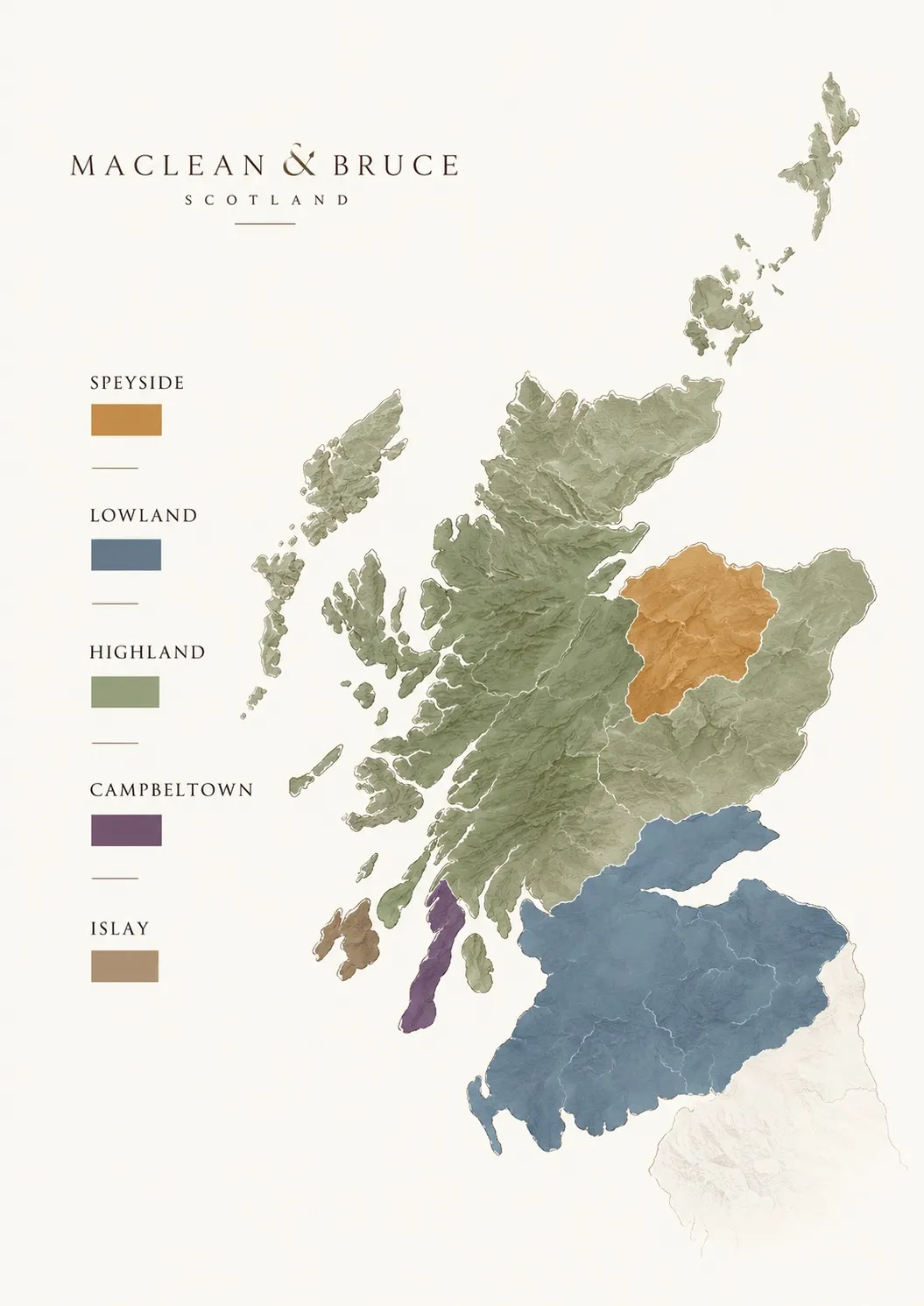
The Scotch Whisky Regulations 2009 protect five names: three regions (Highland, Lowland and Speyside) and two localities (Islay and Campbeltown). They are legal designations rather than flavour guarantees — two distilleries a mile apart can make quite different whisky — but they are still the most useful way to find your bearings when choosing a cask.
Speyside
The densest concentration of distilleries in Scotland, gathered around the River Spey and its tributaries. It lies within the Highland region, so some Speyside distilleries label their whisky as Highland.
Highland
By far the largest region by area: everything north of a line running roughly from Greenock on the Clyde to Dundee on the Tay, up to the far north coast.
Lowland
Everything south of that same line, a boundary that dates back to the Wash Act of 1784.
Islay
A single island off the west coast, with its own protected designation.
Campbeltown
A town on the Kintyre peninsula, home to around thirty distilleries in the late 1800s and only a few today.
The islands
Orkney, Skye, Mull, Jura, Arran and the rest sit within the Highland region in law, though they are usually spoken of separately.
Find a distillery
To see where each distillery sits within its region, explore Scotland’s working distilleries on our interactive map.
Opens in a new tab on macleanandbruce.com.
Thinking about a cask?
Distillery, region, cask type and age all shape what a cask will become. We can help you weigh them against what you hope to do with it.