 M&B Whisky
A cask of your own
A guide to owning Scotch whisky in the cask. Choosing a cask, maturation, costs, bottling and your label, with the questions to ask any seller and a glossary for owners.
18 pages, sent straight to you as a PDF.
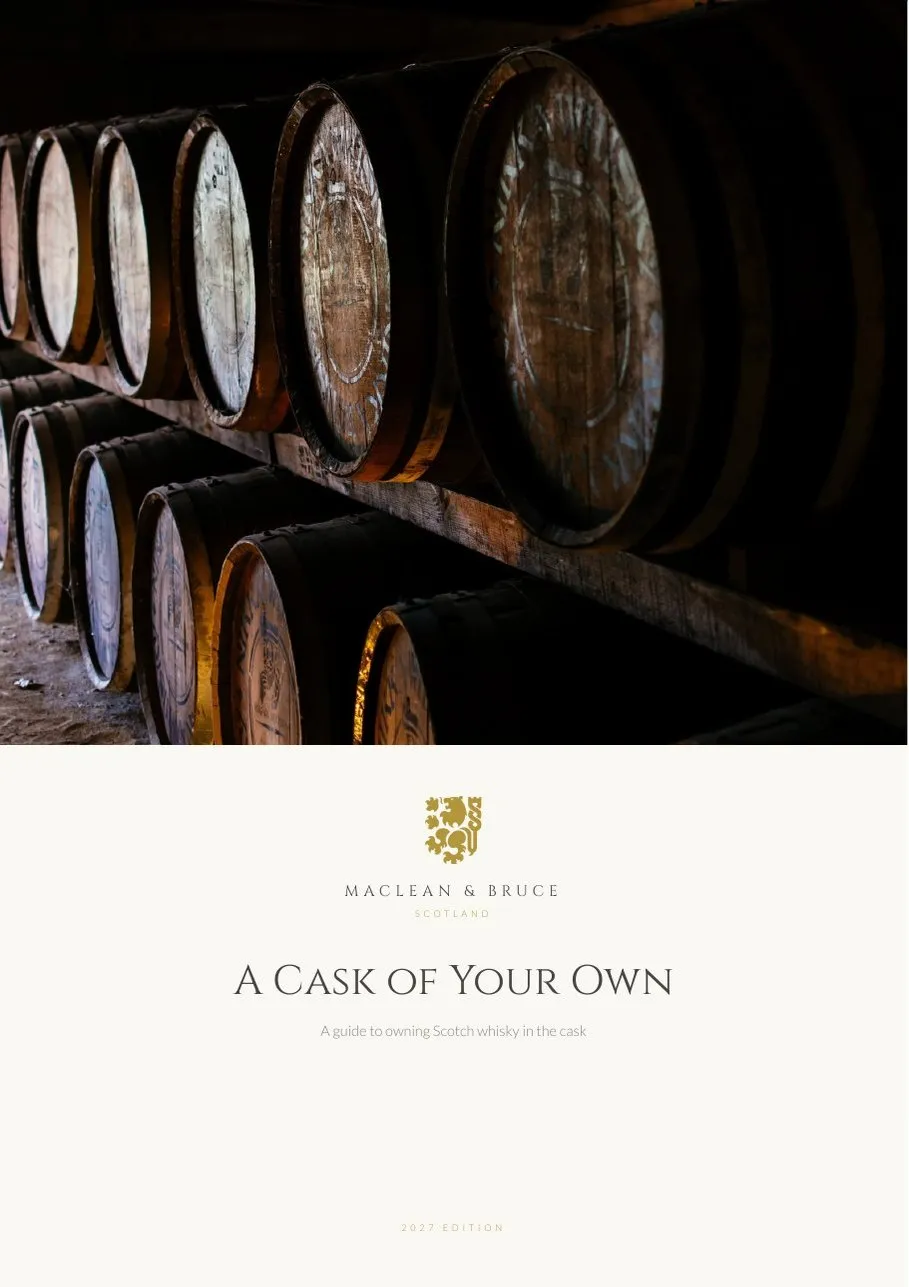
A Cask of Your Own
Choosing a cask, maturation, costs and bottling, with the questions to ask any seller. Free, 18 pages.
Thank you. Your guide is ready.
Something went wrong. Please try again, or email whisky@macleanandbruce.com and we will send it to you.
We use your details to send you the guide. We will only contact you again if you tick the box above. See our privacy policy.
The essentials on one page
3 years
The legal minimum in oak, in Scotland, before spirit becomes Scotch whisky.
40%
The lowest strength at which Scotch whisky may be bottled.
c. 2%
The “angels’ share”: volume lost to evaporation each year, roughly.
In bond
Casks are stored duty-suspended in HMRC-approved warehouses.
Your name
The cask should be held in an account in your own name at the warehouse.
Scotland
Single malt Scotch whisky must be bottled in Scotland.
Eighteen illustrated pages
- Why own a cask
- How ownership works
- Choosing a cask
- Maturation and time
- Costs along the way
- Visiting and sampling
- Bottling your whisky
- Your label
- Insuring, moving and selling
- Questions to ask any seller
- Questions owners often ask
- A glossary for cask owners
Cask values depend on the distillery, the age of the whisky and demand, and can fall as well as rise. Casks are not regulated financial products. Choose casks you would be proud to bottle. Already own one? Try our Bottle Calculator.